
Pomegranate
Punica granatum
🌿 Botanical Info
Overview
Pomegranates are vibrant, nutrient-packed fruits known for their sweet, tart flavor and jewel-like seeds called arils. Originating from the Middle East and the Mediterranean region, pomegranates have been cultivated for thousands of years and are revered in various cultures for their health benefits and symbolic meaning.
Appearance
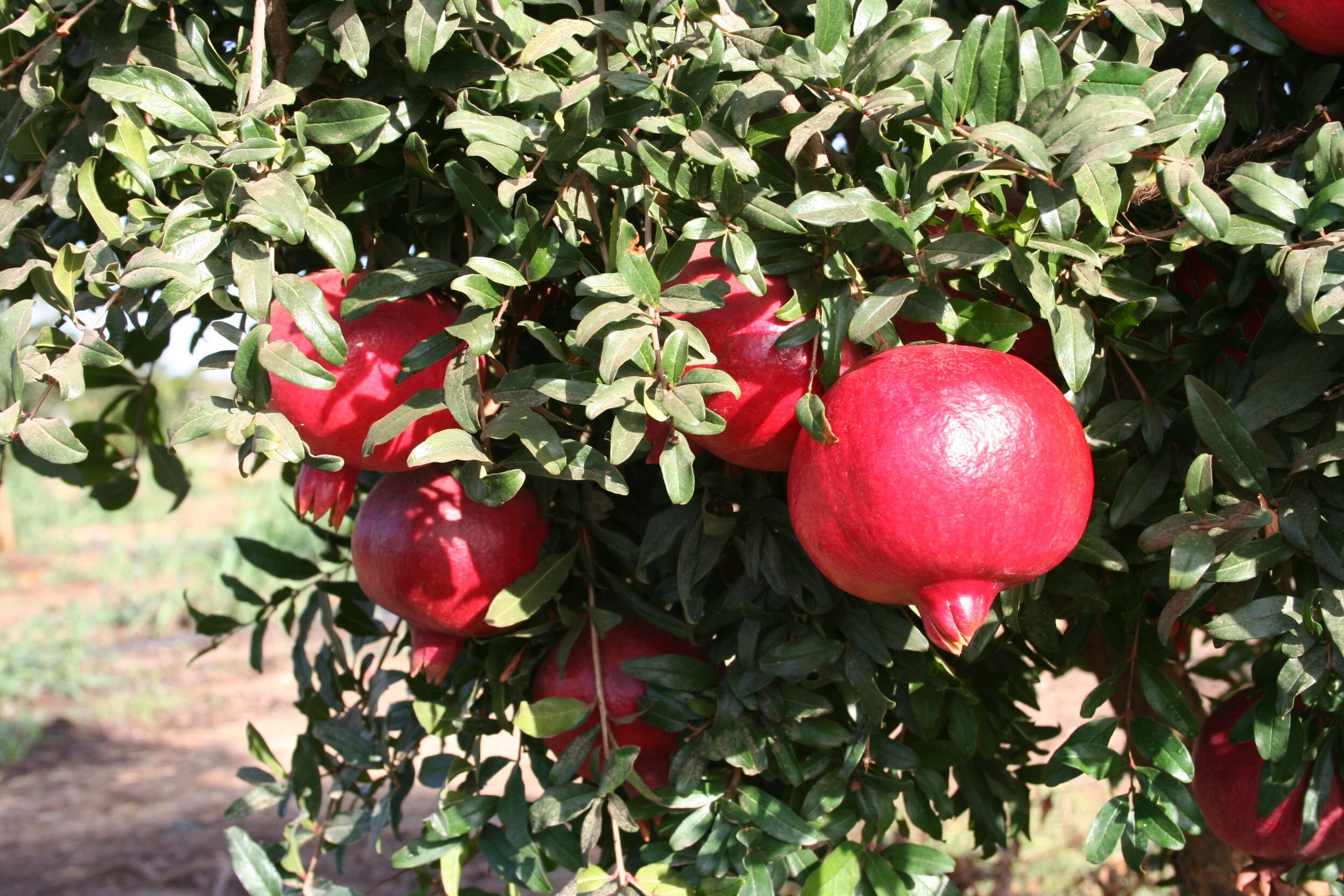
Pomegranates are round with a tough, leathery skin that can range in color from bright red to deep purple. Inside, they are filled with hundreds of edible seeds surrounded by juicy, red pulp, separated by a white, spongy membrane.
Growing Conditions
Pomegranates thrive in hot, dry climates and are well-suited to USDA Zones 7-10. They are drought-tolerant once established but need sufficient warmth to produce fruit. Full sun exposure, with at least 6 hours of direct sunlight per day, is essential for flowering and fruiting.
Cultivation
Pomegranates are usually harvested in the fall, between September and November, when the fruit reaches full color and produces a metallic sound when tapped. Proper care and attention to watering are important during the growing season.
More info
The pomegranate appears in many religious texts and traditions, symbolizing prosperity, righteousness, and eternal life in Christianity, Judaism, and Islam. Pomegranates have been celebrated in art and literature throughout history, often depicted as symbols of abundance and fertility. In some cultures, they are also used in weddings and other celebrations to symbolize good fortune.
🍲 Culinary Uses
Taste and Flavor
The arils have a sweet-tart flavor, with a juicy burst when bitten into. The seeds inside the arils are crunchy and edible, though some people prefer to discard them.
Availability
Pomegranates are typically available in the fall months, with peak harvest occurring from September to November.
Shelf Life
To maximize shelf life, store pomegranates in a cool, dry place or in the refrigerator. They can last several weeks if stored properly. Once opened, the arils should be consumed within a few days for the best flavor.
Allergies
While pomegranates are generally safe, some individuals may experience allergies. The seeds can be hard to digest for some, so individuals with digestive issues may want to consume them in moderation.